
‘Devil in Disguise’ Creator Patrick Macmanus Admits He’s Unsure How Audiences Will React to John Wayne Gacy Series Without Violence: ‘I Don’t Know If a Show That Doesn’t Show Murder Is Going to Work’
Published on Variety.com
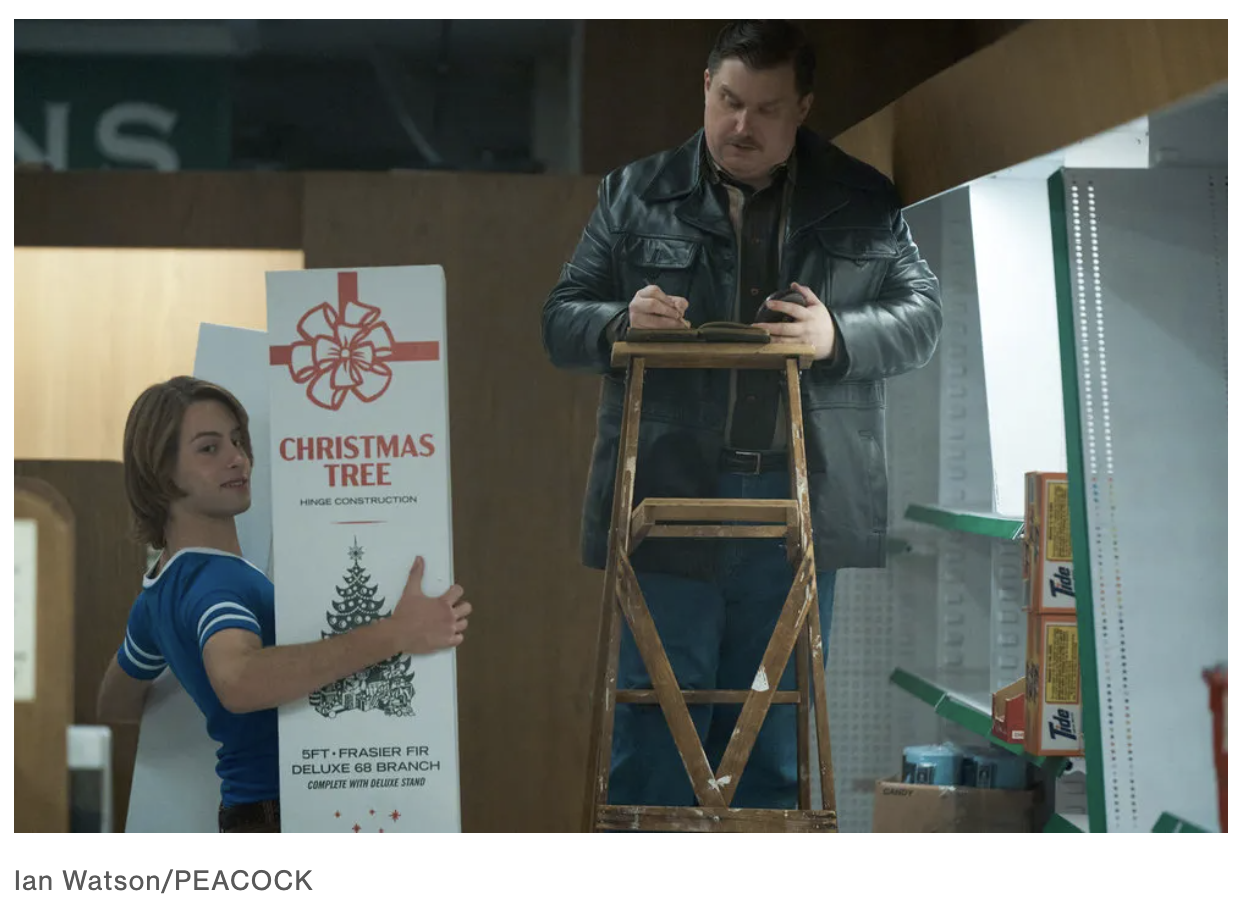
SPOILER ALERT: This story contains spoilers from “Devil in Disguise: John Wayne Gacy,” now streaming on Peacock.
When it comes to true crime TV shows, especially ones about serial killers, there’s a common element among most series: violence. While some claim to focus on the victims’ stories, they also feature murder, sometimes ghoulishy rendered, and an extensive backstory for the killer.
When Patrick Macmanus began his journey of creating a series about John Wayne Gacy’s case, that was the opposite of what he wanted to do. In fact, he refused to do the show unless it was strictly about the victims and didn’t show any of the actual murders of Gacy’s 33 known victims.
Below, Macmanus reflects on initially turning the series down, working closely with GLAAD throughout the process, reaching out to five victims’ families, and the competition — namely Ryan Murphy — in the true crime genre.
You’ve done multiple true crime series now, most recently two seasons of “Dr. Death.” What drew you to John Wayne Gacy’s crimes and his victims specifically?
Look, the short answer is that it didn’t draw me in. I turned it down a couple of times before I said yes, because I didn’t have the foresight of what it could be. What was right in front of me at the time was another serial killer story, and I didn’t want to do another circular story. I am so grateful that Universal and Peacock pushed me. I said I would do it if I could focus on the victims, the police, the lawyers and the families, and when I said it to them, I didn’t know what that meant. It wasn’t until we got the room up and running that I realized that we could do these short stories. I even pitched it to the studio, asking, “Are you going to be OK with me doing these stories that have absolutely no connection to John Wayne Gacy, except little light droppings here or there?” They said yes. I thought they were lying, but they were so supportive right off the bat.
How do you think audiences will react to not showing the actual violence?
I’m really curious how this is going to go. We know that a certain way of telling the story that leans into something that might be seen as a little bit more salacious or gratuitous, that it works. It brings in people, and I don’t know if a show that doesn’t show a murder is going to work — or that allows itself to slow down and tell just the story of hope or tragedy, or dreams lost, or dreams found, or love, or what it’s like to be a sex worker in Chicago in the ’70s. I don’t know if it’s gonna work, but it was definitely worth a shot.
Can you talk about the research process?
All of our research began with NBC News and the Peacock documentary. So they had an extraordinary treasure trove of research. We built out various books that became our go-to for information and for inspiration. And then on top of that, we have Patrick Murphy, who’s our private researcher. He came up with thousands of pages of research that came from court documents, interviews, interrogations, etc.
From the beginning, we wanted to make every effort to reach out to all of the living family members and even a couple of the living victims. And so a list was put together that came from a lot of hours of research that I had nothing to do with, trying to hunt down home addresses, emails, phone numbers of everyone that we could find. We only ultimately ended up connecting with five people. We reached out with full understanding that there was a probability that they would be angry or that they would be hurt. The point of this isn’t for people to give us their blessing. The point of this is for them to be heard and and while it wasn’t going to stop us from making the show, I wanted them to be able to have the ability to be able to tell us what they really thought and guide us as much as they possibly could if they wanted to. I will say that of the five people that we connected, five for five wished us well.
You didn’t show any of the trial. Did you ever discuss including any of that?
No, I hate trials. “Dr. Death” was an example of where I strategically showed the trial, and that was only because we knew from the beginning that it was in the trial that we would show the surgeries for the first time. With “Devil in Disguise,” the trial was so well known and so well worn.
The score of this show, done by Leopold Ross and Nick Chuba, includes 33 tracks, the number of known victims. Whose idea was that?
That was actually a late conversation with our composers, where we were trying to find how to score the show in a way that could also honor the victims. So much of what they do and why I work with them over and over again is that they are exceptional at their jobs. I don’t mean just the scoring of our shows, but fundamentally understanding the vision of what each of the shows is. I give them complete credit for hearing rambling from me and creating something so special with our score.
I know most of your writers’ room is queer, and you also worked closely with GLAAD on this. What was that process like?
Early on in the process of us developing the show, even before the writers’ room, I knew there was going to be a portion of the story that was about the latent homophobia that coursed through the investigation of John Wayne Gacy. It was really important to me that GLAAD become a partner. They agreed to take a look at our outlines and advise on the scripts. They didn’t agree to come on as formal advisors at that point because they wanted to see the final product before they could formalize our partnership, which I completely understood. But I have to tell you, I don’t think I was nervous about anything in this process except waiting for GLAAD to watch the cuts. I remember exactly where I was when I got the call from GLAAD saying that they were on board to become formal and public partners for the show. That is the thing I am most proud of in this entire process — that they gave us what we needed to know to tell this story right, real, and respectfully.